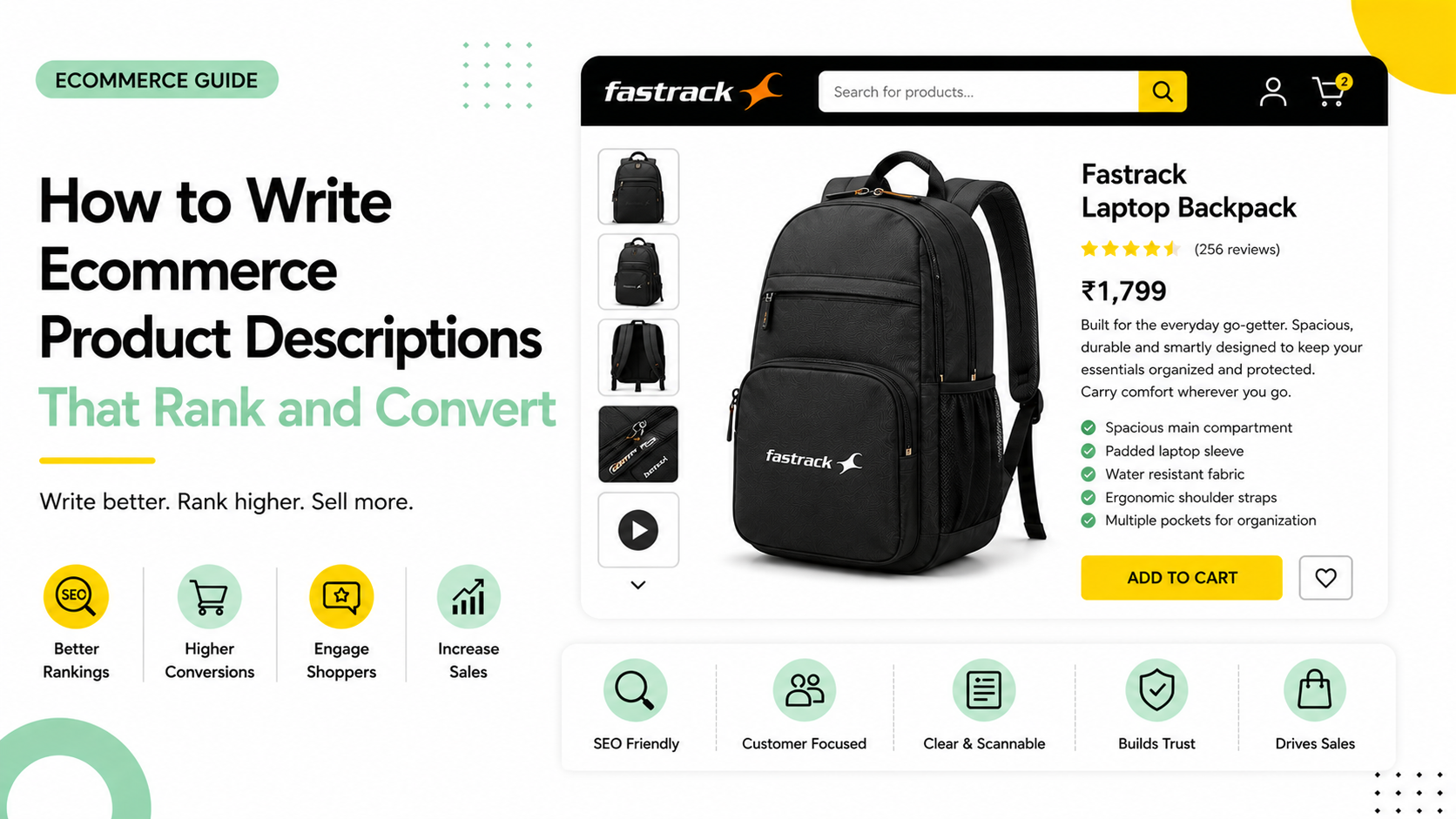
Staring at a blank product page, cursor blinking, unsure whether to lead with specs or benefits or if anyone will even read past line one? You're not alone. This post breaks down what a product description is actually meant to do, the SEO fundamentals behind discovery, and the habits that turn visits into sales.
Product descriptions aren't just information dumps. They're persuasion tools that also need to satisfy search engines. Balancing both is where most sellers get stuck.
By the end, you'll have a clear, repeatable process for writing descriptions yourself or briefing someone else to do it right.
What Is a Product Description?
In ecommerce, a product description is the block of copy that explains what you're selling, why it matters, and why someone should buy it from you rather than scroll past.
That's the simplest product description definition in ecommerce terms but the good ones do more than describe. They persuade, reassure, and answer the exact question a shopper is silently asking: "Is this right for me?"
Why Getting This Right Matters More Than You Think
You might assume shoppers barely read product descriptions. The data says otherwise. According to a Retail TouchPoints survey of 1,000 US consumers, accurate product content influences 87% of shoppers' purchase decisions. Also, 50% of shoppers say they've returned an item because it didn't match the description.
Your product photographs are always the hook. AI product photography makes sure that hook lands fast, but your product descriptions are what make or break the final buying decision. If a buyer can't find the specific detail they came looking for, they won't dig for it. They'll just move on.
E-commerce Product Description Best Practices
A few habits separate product descriptions that convert from ones that just take up space:
- Lead with the benefit, not the spec. "300 GSM cotton" is a fact. "Soft enough to sleep in, sturdy enough to survive weekly washes" is a reason to buy.
- Write for the specific shopper, not everyone. A vague description trying to appeal to all buyers usually persuades none of them.
- Answer the objection before it's asked. If reviews keep mentioning sizing confusion, address it directly in the copy.
- Use scannable formatting. Most shoppers are scanning on a phone, not reading a paragraph closely.
- Copy and the SEO goal end up being the same piece of work, not two competing ones.
Following these best practices consistently across hundreds or thousands of SKUs can be challenging, especially for growing brands.
That's why many ecommerce businesses invest in product content optimization. It ensures every product page is search-friendly, accurate, and written to convert while maintaining consistency across their entire catalog.
A Simple Writing Process You Can Reuse
When you sit down to do e-commerce product description writing, this order tends to work well:
"Identify what genuinely sets the product apart, not the spec sheet itself, but what each spec actually means for the buyer."
- Identify the one or two objections most likely to stop someone from buying.
- Draft an opening line that leads with the strongest benefit and the primary keyword.
- Add supporting details in short, scannable bullets.
- Close with a line that removes hesitation, a guarantee, a use case, a reassurance.
- Read it back as a shopper would, not as the person who already knows the product inside out.